ACCA– Strategic Business Reporting (SBR)
Enhance your financial reporting skills with our ACCA Strategic Business Reporting course.
Program rating
1,531+
Learners enrolled
70 hrs
Total duration
English,Hindi
Language
This program includes
Program overview
About this program
This Finance & Taxation program blends live, mentor-led sessions with hands-on projects and real-world case studies, so you build genuinely job-ready skills — not just theory. You'll learn from working industry experts, apply what you learn on practical assignments, and finish with a portfolio, a recognized certificate, and dedicated placement support to help you land the right role.
Enhance your financial reporting skills with our ACCA Strategic Business Reporting course.
Our ACCA Strategic Business Reporting (SBR) course is designed for candidates preparing for the ACCA SBR exam. This comprehensive course covers in-depth financial reporting topics, including the preparation of financial statements, regulatory frameworks, and advanced performance management. With 70 hours of interactive content and assessments, you will gain the knowledge and skills needed to excel in strategic business reporting.
Why learners love this program
- Exam-aligned syllabus covering IFRS, preparation of financial statements, and regulatory frameworks
- 70 hours of interactive content with assessments, practical case studies, and mock exams to build exam technique
- Expert instructors, up-to-date materials, and personalized feedback to ensure ACCA SBR readiness
35
Lectures
70
Hours
All level
Level
Globally trusted accreditations
Recognitions that power your profile
Trusted by leading accreditation bodies — so your certificate is respected by employers worldwide.









Learning outcomes
What you'll be able to do
Curriculum
Structured modules that build real skills
18 modules · designed for progressive, hands-on learning.
Purpose and scope of SBR
Explain the aims and scope of strategic business reporting and how it supports stakeholder decision-making.
Key concepts and terminology
Define key terms and concepts used in financial reporting to ensure a consistent understanding of foundational principles.
Stakeholders and reporting objectives
Identify principal stakeholders and describe their information needs from financial reports.
Corporate reporting ecosystem
Outline the roles of standard-setters, regulators and auditors in shaping the reporting environment.
Revenue and expense recognition
Understand the criteria for recognising revenue and expenses and apply them to common scenarios.
Presentation and analysis of profit figures
Explain presentation requirements for profit measures and analyse their impact on performance assessment.
Statement of financial position items
Describe classification, recognition and measurement of assets, liabilities and equity items.
Statement of cash flows and classification
Prepare and interpret cash flow statements, distinguishing operating, investing and financing activities.
Measurement bases and estimates
Compare measurement bases (historical cost, fair value) and assess the use of estimates and judgements.
Disclosure of accounting policies and judgments
Explain disclosure requirements for significant accounting policies and management judgements.
Conceptual framework and IAS/IFRS overview
Summarise the conceptual framework and key IFRS standards relevant to strategic reporting.
Applying IFRS to reporting issues
Apply IFRS principles to practical reporting problems and evaluate appropriate accounting treatments.
Key differences between local GAAP and IFRS
Identify common differences between local GAAP and IFRS and their effect on financial statements.
Reconciling financial statements across frameworks
Demonstrate methods to reconcile and explain adjustments between reporting frameworks.
Profitability and efficiency ratios
Calculate and interpret key profitability and efficiency ratios to assess operational performance.
Liquidity and solvency analysis
Use liquidity and solvency metrics to evaluate short-term and long-term financial health.
Horizontal and vertical analysis
Perform trend (horizontal) and common-size (vertical) analysis to reveal performance patterns.
Cash flow analysis for strategic planning
Assess cash flow trends and their implications for investment, financing and operational decisions.
Fair value measurement concepts
Explain the principles and hierarchy of fair value measurement for different asset classes.
Valuation techniques and models
Apply valuation techniques and select appropriate models for estimating fair value in practice.
Disclosure and impairment considerations
Evaluate disclosure requirements and impairment testing implications for fair valued assets.
Classification and measurement of financial instruments
Classify financial assets and liabilities and determine appropriate measurement bases.
Hedge accounting and disclosures
Understand hedge accounting requirements and prepare required disclosures for risk management activities.
Professional ethics and integrity
Explain ethical principles and the importance of integrity in preparing financial reports.
Regulatory responsibilities and independence
Describe professional responsibilities, independence requirements and their impact on reporting credibility.
Ethical dilemmas and decision making
Apply ethical frameworks to real-world dilemmas encountered in financial reporting.
Whistleblowing and reporting misconduct
Outline procedures and protections for reporting misconduct and ensuring transparency.
Automated reporting systems and XBRL
Explore how automation and XBRL streamline reporting and enhance data usability.
Electronic filing and regulatory change impact
Assess the implications of electronic filing requirements and rapid regulatory changes on reporting processes.
Data analytics for financial reporting
Demonstrate how data analytics improves accuracy, insight and auditability of reports.
Blockchain, AI and future reporting trends
Evaluate the potential of blockchain and AI to transform financial reporting and assurance.
Exam technique and time management
Adopt effective exam strategies, question approach and time allocation for the SBR assessment.
Common pitfalls and answer structuring
Identify common candidate errors and practise structured answer formats to maximise marks.
Corporate reporting case analysis A
Analyse a complex corporate reporting case and extract appropriate accounting solutions.
Corporate reporting case analysis B
Apply reporting principles to a second case focusing on disclosures and stakeholder impact.
Synthesising case findings into recommendations
Synthesize case conclusions into clear recommendations for management and users of financial statements.
Mock exam practice and feedback
Complete timed mock exams and receive targeted feedback to strengthen weak areas.
Final review and exam readiness checklist
Consolidate key topics and follow a readiness checklist to ensure confidence on exam day.
Your credential
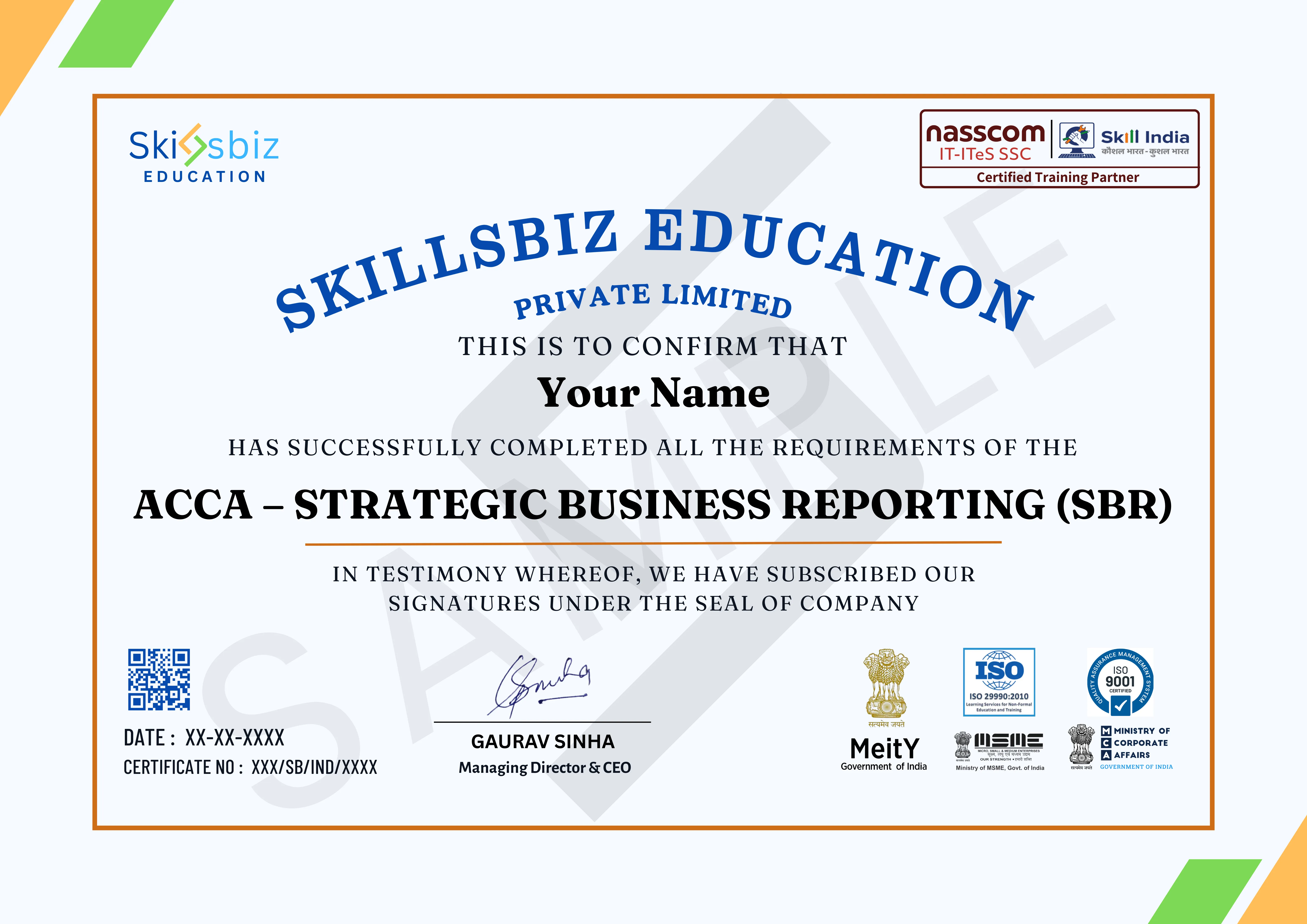
The certificate you'll earn
Earn an industry-recognized certificate on successful completion of this program.
Personalised guidance
Book a free discovery call with our specialists
Get tailored advice on learning paths, certification journeys, and industry opportunities before you enroll.
- Understand the skill gaps holding you back and the modules that close them.
- Get a cohort recommendation based on availability and your weekly bandwidth.
- Discover certification add-ons that strengthen your CV.
Reserve your slot
Share your details and we'll connect within 24 hours.
Reviews
What our learners say
Strategic Business Reporting improved my professional judgement skills. Detailed discussions on accounting treatments made complex areas manageable.
Learning advanced reporting techniques helped me understand how businesses present financial performance. SBR sessions felt structured and exam-focused.
SBR preparation strengthened my ability to interpret financial statements critically. Working through consolidation and ethics questions improved my accuracy.
Learning advanced reporting frameworks through SBR gave me clarity on professional judgement. Practicing case-based questions improved my structure and depth of answers.
SBR preparation strengthened my ability to apply accounting standards logically. Working on consolidated and ethical reporting cases made the subject much clearer.
ACCA Strategic Business Reporting helped me understand IFRS standards at a deeper level. Analysing complex reporting scenarios improved my confidence in interpreting financial statements critically.
FAQ
Your questions, answered
Everything you need to know before you enroll. Still unsure? Our advisors are one call away.
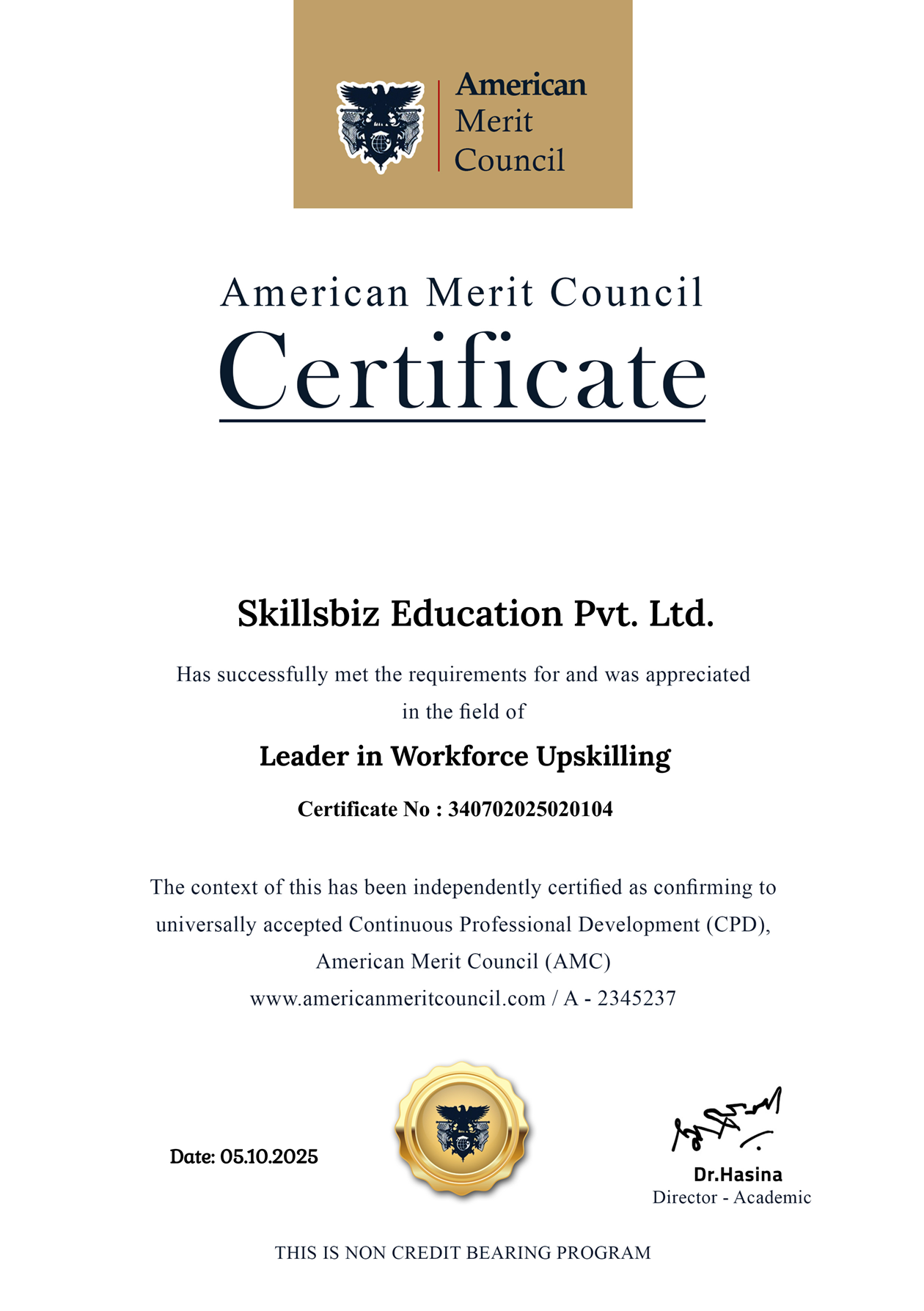
Honored for excellence
Awards & recognitions
Our pedagogy, learner outcomes, and mentor network have been acknowledged by industry councils and global forums.




Media spotlight
Featured in leading publications










Ready to start ACCA– Strategic Business Reporting (SBR)?
Enroll today or book a free counselling call to get a personalized learning path.