Business Analytics with Python
Unlock the power of data analysis in business using Python. This comprehensive course will equip you with the essential skills to analyze and visualize data, making informed business decisions.
Program rating
1,761+
Learners enrolled
48 hrs
Total duration
English,Hindi
Language
This program includes
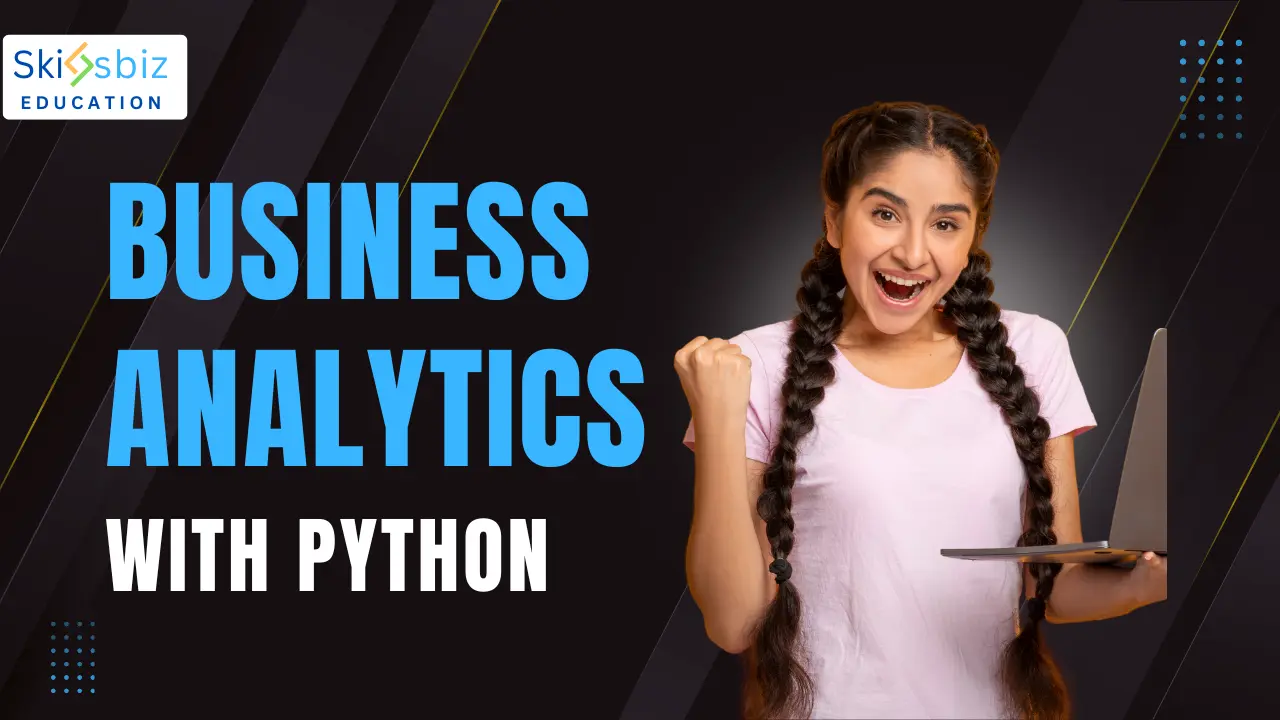
Program overview
About this program
This Data Analyst program blends live, mentor-led sessions with hands-on projects and real-world case studies, so you build genuinely job-ready skills — not just theory. You'll learn from working industry experts, apply what you learn on practical assignments, and finish with a portfolio, a recognized certificate, and dedicated placement support to help you land the right role.
Unlock the power of data analysis in business using Python. This comprehensive course will equip you with the essential skills to analyze and visualize data, making informed business decisions.
This course covers business analytics concepts and techniques using Python. Participants will learn how to work with data, apply statistical methods, create visualizations, and develop insights for effective decision-making in business. By the end of the course, you will be able to analyze real-world data sets and make data-driven decisions.
Why learners love this program
- Hands-on Python data manipulation and cleaning (pandas & NumPy) to prepare and transform real-world business datasets.
- Applied statistical analysis and basic predictive modeling to generate data-driven insights for business decisions.
- Data visualization and storytelling using matplotlib, Seaborn, and Plotly to communicate actionable insights and build dashboards.
24
Lectures
48
Hours
All level
Level
Globally trusted accreditations
Recognitions that power your profile
Trusted by leading accreditation bodies — so your certificate is respected by employers worldwide.









Learning outcomes
What you'll be able to do
Curriculum
Structured modules that build real skills
15 modules · designed for progressive, hands-on learning.
What is Business Analytics?
Define business analytics and explain its role in data-driven decision-making in organizations.
Analytics Lifecycle and Use Cases
Describe the analytics lifecycle and identify common business use cases where analytics adds value.
Python Installation and Environment Setup
Set up a Python environment and explain the tools commonly used for data analysis, including Jupyter and virtual environments.
Basic Syntax and Data Types
Understand Python syntax, core data types, and basic operations for working with data.
Control Flow and Functions
Write control flow statements and functions to structure code and automate repetitive tasks.
Data Structures in Pandas (Series & DataFrame)
Explain Pandas primary data structures and perform basic indexing and selection operations.
Data Cleaning and Preparation
Apply techniques to clean, handle missing values, and standardize datasets for analysis.
Transformations and Aggregations
Perform data transformations, group-wise aggregations, and pivot operations to prepare analysis-ready tables.
Creating Plots with Matplotlib
Create common plot types (line, bar, scatter) using Matplotlib to visualize key patterns in data.
Customizing Figures and Styles
Customize plot aesthetics, labels, legends, and layouts to make visualizations clear and professional.
Statistical Plots with Seaborn
Use Seaborn to create statistical visualizations such as distribution plots and categorical comparisons.
Advanced Seaborn Techniques
Apply advanced Seaborn features like faceting and theme settings to enhance exploratory visuals.
Summary Statistics and Distributions
Compute and interpret summary statistics and distributional measures to characterize datasets.
Data Exploration and EDA Techniques
Conduct exploratory data analysis to uncover trends, outliers, and relationships in business data.
Hypothesis Testing Basics
Formulate hypotheses and perform basic statistical tests to support decision-making under uncertainty.
Confidence Intervals and Correlation
Construct confidence intervals and assess correlation to quantify relationships and estimate parameters.
Regression Models
Build and evaluate regression models to predict continuous business outcomes.
Classification Models
Train and assess classification models for predicting categorical outcomes and measuring performance.
Clustering Methods
Apply clustering techniques to segment data and discover natural groupings.
Dimensionality Reduction
Use dimensionality reduction methods to simplify data and improve model performance or visualization.
Interactive Charts with Plotly
Create interactive charts that allow users to explore data through hover, zoom, and filter features.
Plotly Express and Figure Customization
Leverage Plotly Express for rapid charting and customize figures for presentation and dashboards.
Dashboard Layouts and Callbacks
Design Dash app layouts and implement callbacks to create interactive, reactive dashboards.
Deploying and Sharing Dashboards
Prepare and deploy Dash applications for sharing results with stakeholders and collaborators.
Data Preparation and Exploration
Prepare the sales dataset and perform exploratory analysis to identify key metrics and trends.
Deriving Business Insights
Translate analysis results into actionable business insights and recommendations for stakeholders.
Project Scoping and Dataset Selection
Define project objectives, select appropriate datasets, and outline success criteria for the final project.
Designing Analysis Approach
Plan the analysis workflow, choose methods and visualizations, and assign milestones for project execution.
Implementing Analysis and Visuals
Execute the planned analysis, build models and visualizations, and iterate based on findings.
Reporting Results and Presentation
Compile findings into a clear report and present results with supporting visuals and recommendations.
Recap and Key Takeaways
Summarize core concepts learned and reflect on how to apply them in business contexts.
Further Learning Resources and Career Paths
Identify resources and learning pathways to continue skill development and explore career opportunities in analytics.
Your credential
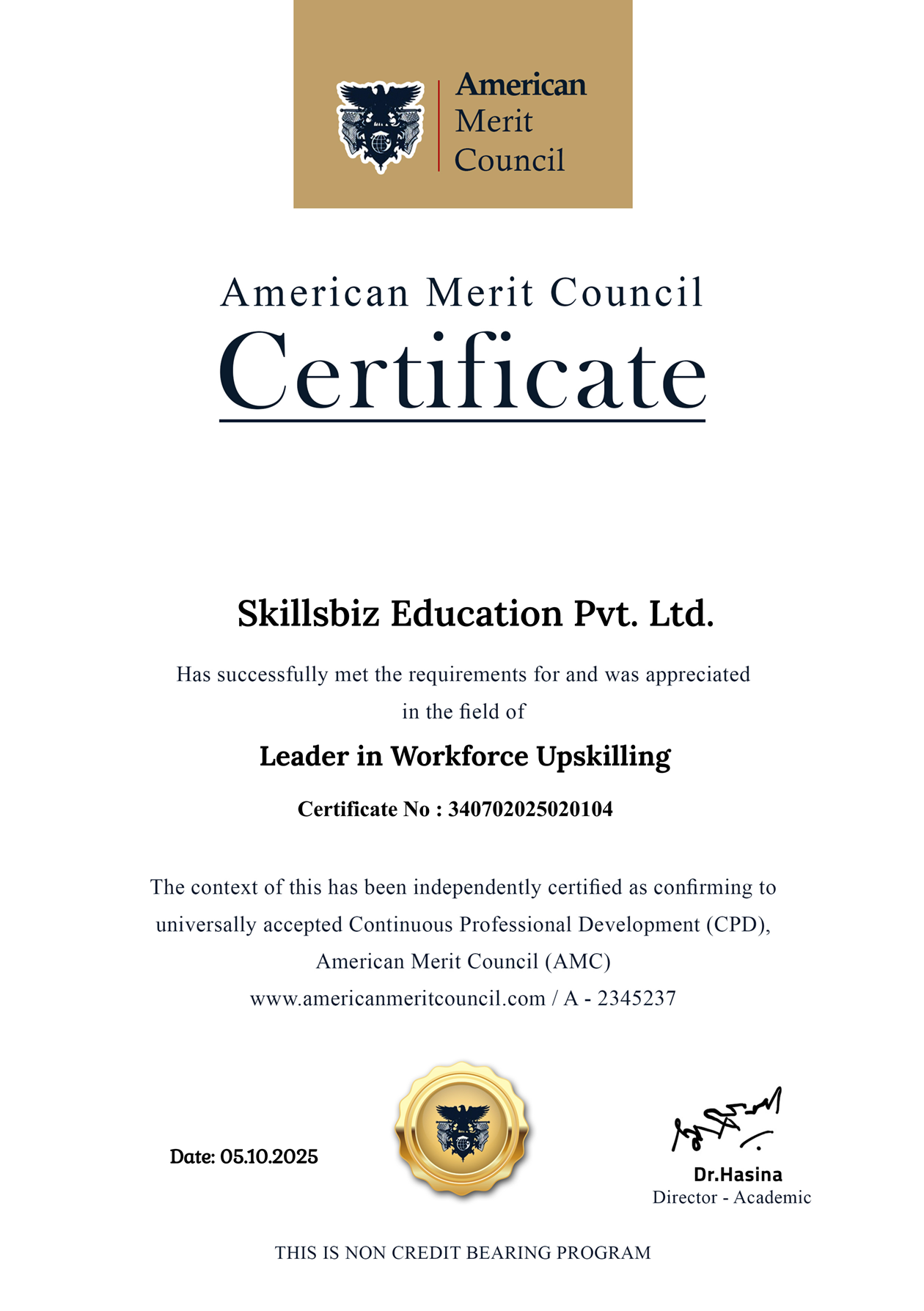
The certificate you'll earn
Earn an industry-recognized certificate on successful completion of this program.

Personalised guidance
Book a free discovery call with our specialists
Get tailored advice on learning paths, certification journeys, and industry opportunities before you enroll.
- Understand the skill gaps holding you back and the modules that close them.
- Get a cohort recommendation based on availability and your weekly bandwidth.
- Discover certification add-ons that strengthen your CV.
Reserve your slot
Share your details and we'll connect within 24 hours.
Reviews
What our learners say
This course helped me see how Python supports decision-making. Data analysis and visualisation exercises made learning interactive and practical.
Business Analytics with Python helped me think more analytically. Visualising data and drawing insights felt very rewarding.
Business Analytics with Python helped me build confidence in working with data. Cleaning, analysing, and visualising datasets made analytics feel approachable and useful.
Business Analytics concepts became clearer once Python was applied to real datasets. Visualising trends and insights helped me understand patterns quickly.
I enjoyed how Python was taught alongside real business problems. Cleaning data, analysing trends, and building reports gave me confidence to work with real datasets.
Business Analytics with Python helped me understand how data actually turns into insights. Working with pandas, NumPy, and visualisation libraries made analysis feel practical instead of theoretical.
FAQ
Your questions, answered
Everything you need to know before you enroll. Still unsure? Our advisors are one call away.
Honored for excellence
Awards & recognitions
Our pedagogy, learner outcomes, and mentor network have been acknowledged by industry councils and global forums.




Media spotlight
Featured in leading publications









Ready to start Business Analytics with Python?
Enroll today or book a free counselling call to get a personalized learning path.