CSCP - Certified Supply Chain Professional
Enhance your career in supply chain management with the CSCP certification tailored for professionals seeking to optimize and manage supply chains globally.
Program rating
1,793+
Learners enrolled
60 hrs
Total duration
English,Hindi
Language
This program includes
Program overview
About this program
This Management program blends live, mentor-led sessions with hands-on projects and real-world case studies, so you build genuinely job-ready skills — not just theory. You'll learn from working industry experts, apply what you learn on practical assignments, and finish with a portfolio, a recognized certificate, and dedicated placement support to help you land the right role.
Enhance your career in supply chain management with the CSCP certification tailored for professionals seeking to optimize and manage supply chains globally.
The Certified Supply Chain Professional (CSCP) course provides a comprehensive understanding of supply chain management basics, techniques, and concepts. It empowers you with the knowledge needed to manage the supply chain complexities and enhance overall business performance. This course includes in-depth discussions on supply chain design, management, and operations for a holistic understanding.
Why learners love this program
- End-to-end supply chain strategy and design — frameworks for aligning supply chain network design with business goals and global market requirements.
- Operational excellence and process optimization — techniques for inventory management, demand forecasting, lean operations, and continuous improvement.
- Technology, analytics, and risk management — use of digital tools, data-driven decision making, and strategies to identify and mitigate supply chain risks.
30
Lectures
60
Hours
All level
Level
Globally trusted accreditations
Recognitions that power your profile
Trusted by leading accreditation bodies — so your certificate is respected by employers worldwide.





Learning outcomes
What you'll be able to do
Curriculum
Structured modules that build real skills
18 modules · designed for progressive, hands-on learning.
Overview of Supply Chain Concepts
Explain core supply chain concepts and the role of supply chains in business operations.
Components of a Supply Chain
Describe primary components of supply chains including suppliers, manufacturers, distributors, and customers.
Key Terminology and Metrics
Define essential supply chain terminology and performance metrics used to evaluate effectiveness.
Stakeholder Roles and Responsibilities
Identify stakeholder roles across the supply chain and how responsibilities influence decision-making.
Design Principles and Objectives
Explain principles of supply chain design and how design choices align with business objectives.
Facility Location and Capacity Planning
Assess factors affecting facility location and capacity planning to optimize network performance.
Network Modeling and Optimization
Apply basic network modeling concepts to evaluate trade-offs between cost, service, and responsiveness.
Supplier Selection and Evaluation
Describe criteria and processes for selecting and evaluating suppliers to build reliable supply bases.
Collaboration and Contracting
Explain collaboration models and contracting strategies that foster long-term supplier partnerships.
Demand Forecasting Methods
Compare quantitative and qualitative forecasting methods and select appropriate approaches for given scenarios.
Demand Planning Processes
Illustrate demand planning workflows and how they integrate with sales and operations planning.
Inventory Fundamentals and Models
Explain inventory types, costs, and basic inventory models used to balance service and cost.
Reorder Policies and Safety Stock
Calculate reorder points and safety stock levels to maintain service targets while controlling inventory.
Sales and Operations Planning (S&OP)
Describe S&OP processes and how cross-functional alignment supports supply chain performance.
Transportation and Distribution Strategies
Analyze transportation modes and distribution strategies to optimize delivery performance and cost.
Warehousing and Material Handling
Describe warehousing functions and material handling practices that improve throughput and accuracy.
Order Management Processes
Explain order-to-cash processes and best practices for efficient order management.
Fulfillment Models and Strategies
Compare fulfillment models such as centralized, decentralized, and drop-shipping and their trade-offs.
Customer Service and Returns Management
Describe customer service principles and reverse logistics strategies to manage returns and satisfaction.
Types of Supply Chain Risks
Identify common supply chain risks including operational, financial, and geopolitical threats.
Risk Assessment Techniques
Apply risk assessment tools to prioritize risks based on likelihood and impact.
Risk Mitigation Strategies
Outline strategies such as redundancy, diversification, and insurance to mitigate identified risks.
Building Resilient Supply Chains
Explain principles and practices that increase supply chain resilience and recovery capability.
Trade Regulations and Incoterms
Summarize key international trade regulations and Incoterms that affect cross-border shipments.
Customs, Duties, and Documentation
Identify documentation and customs processes required for compliant international logistics.
Cultural and Communication Factors
Describe how cultural differences and communication practices impact global supply chain management.
Economic and Political Influences
Analyze how economic conditions and political factors influence global sourcing and operations.
IoT Applications in Supply Chains
Explain IoT use cases for visibility, tracking, and condition monitoring in supply chains.
AI and Machine Learning for Planning
Describe how AI and machine learning enhance forecasting, demand sensing, and decision-making.
Automation and Robotics
Assess the role of automation and robotics in warehouse and distribution center optimization.
Data Management and Analytics
Explain best practices for data governance and how analytics drive performance improvements.
Blockchain and Traceability
Describe blockchain concepts and how distributed ledgers can improve traceability and trust.
Sustainability Principles in Supply Chains
Explain sustainability concepts and their implications for supply chain decision-making.
Measuring and Reporting Sustainability
Identify metrics and reporting frameworks used to measure environmental and social performance.
Green Procurement Practices
Describe procurement strategies that incorporate environmental and social criteria.
Circular Economy and Reverse Logistics
Explain circular economy principles and reverse logistics approaches to reduce waste.
Skills and Competency Development
Identify key skills and competencies for supply chain professionals and paths to develop them.
Career Paths and Certification Benefits
Outline common career trajectories and how certifications like CSCP enhance professional growth.
Exam Strategies and Study Plans
Provide practical exam strategies and study plan structures to prepare effectively for the CSCP exam.
Practice Questions and Review Techniques
Use practice questions and targeted review techniques to strengthen exam readiness.
Your credential
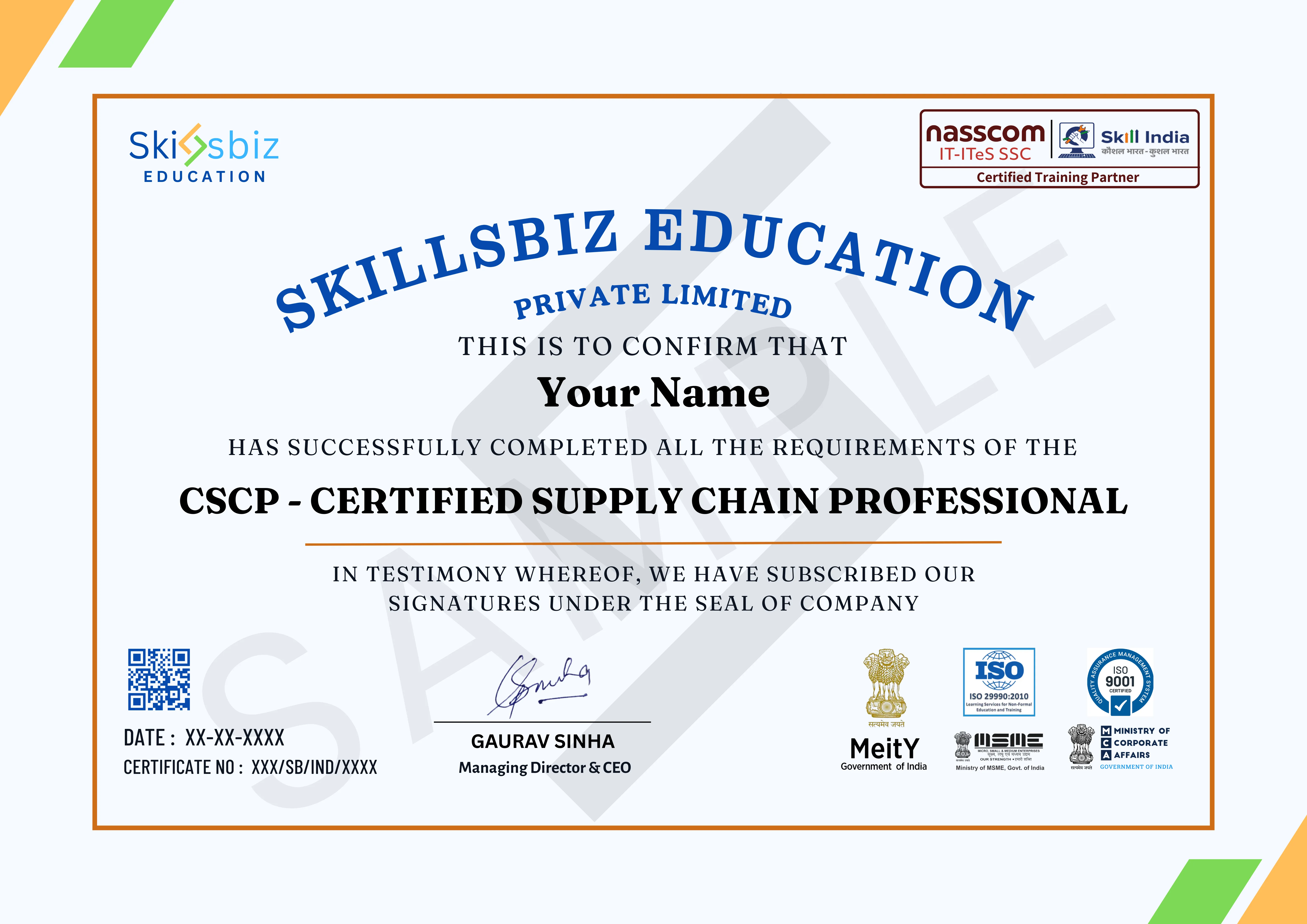
The certificate you'll earn
Earn an industry-recognized certificate on successful completion of this program.
Personalised guidance
Book a free discovery call with our specialists
Get tailored advice on learning paths, certification journeys, and industry opportunities before you enroll.
- Understand the skill gaps holding you back and the modules that close them.
- Get a cohort recommendation based on availability and your weekly bandwidth.
- Discover certification add-ons that strengthen your CV.
Reserve your slot
Share your details and we'll connect within 24 hours.
Reviews
What our learners say
CSCP preparation strengthened my analytical skills in supply chain planning. Working on real examples made learning engaging.
Preparing for CSCP strengthened my knowledge of inventory and demand planning. Practical examples made concepts easier to grasp.
CSCP helped me understand supply chain management in a structured way. Learning how different stages connect improved my overall clarity.
CSCP clarified how supply chains operate globally. Learning forecasting, procurement, and distribution together made concepts easy to understand.
Preparing for CSCP improved my understanding of global supply chain strategies. Concepts like demand planning and inventory control became much clearer.
CSCP helped me understand supply chain from an end-to-end perspective. Learning planning, sourcing, and logistics together gave me a complete view of operations.
FAQ
Your questions, answered
Everything you need to know before you enroll. Still unsure? Our advisors are one call away.
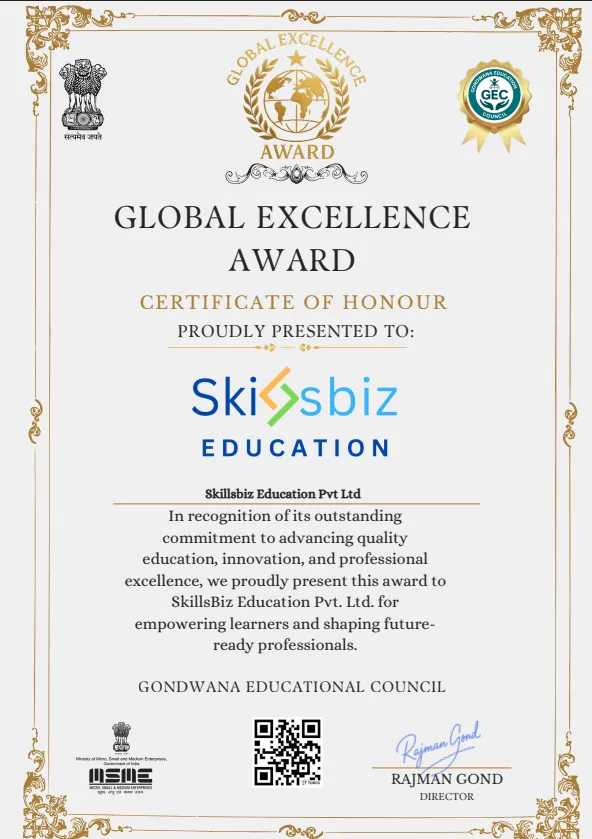
Honored for excellence
Awards & recognitions
Our pedagogy, learner outcomes, and mentor network have been acknowledged by industry councils and global forums.



Media spotlight
Featured in leading publications









Ready to start CSCP - Certified Supply Chain Profession...?
Enroll today or book a free counselling call to get a personalized learning path.