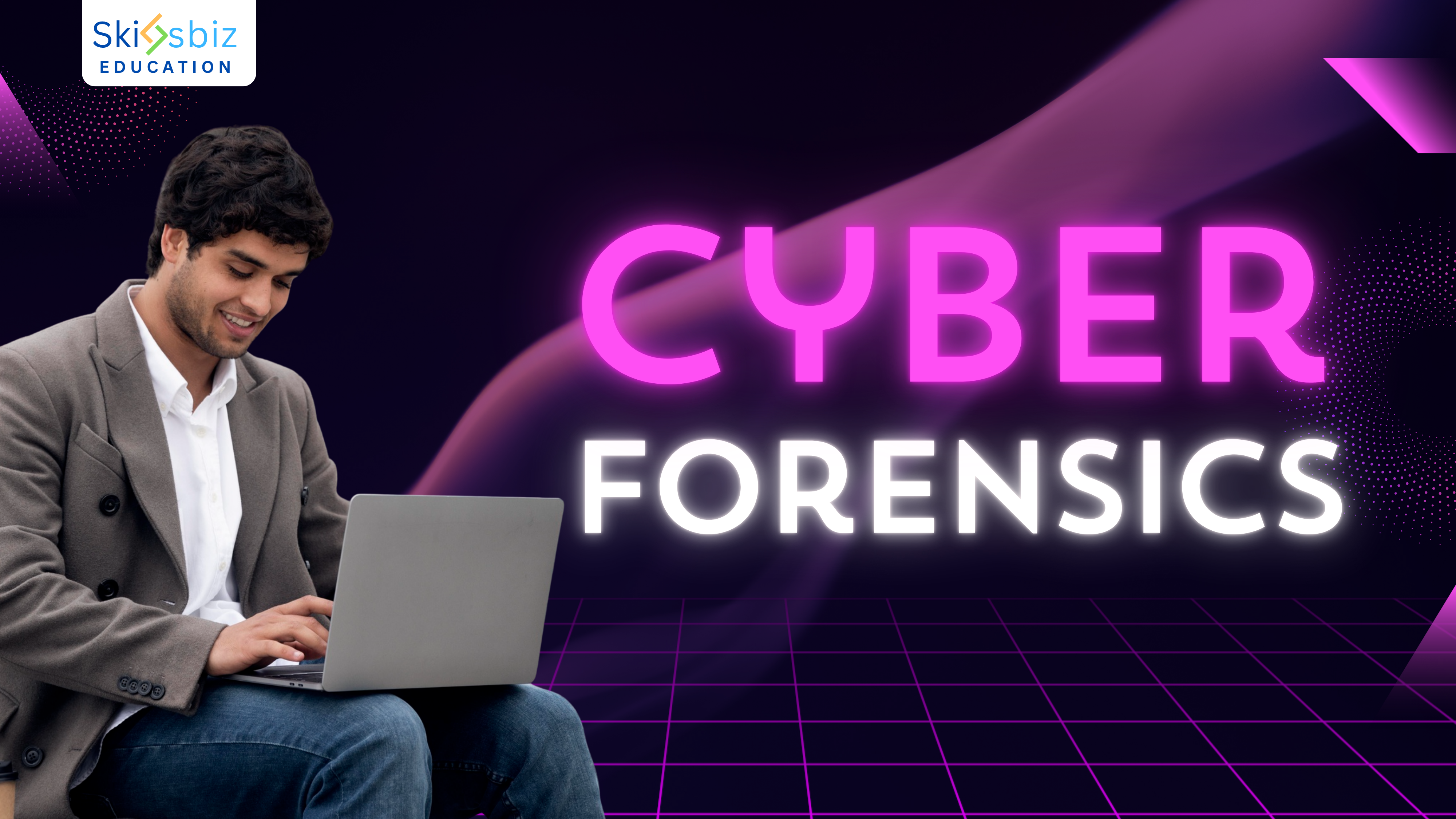
Professional Cyber Forensics Training Program
This comprehensive program will equip you with the essential skills to analyze and investigate cybercrime and digital evidence.
Program rating
1,749+
Learners enrolled
120 hrs
Total duration
English,Hindi
Language
This program includes
Program overview
About this program
This Technology & IT program blends live, mentor-led sessions with hands-on projects and real-world case studies, so you build genuinely job-ready skills — not just theory. You'll learn from working industry experts, apply what you learn on practical assignments, and finish with a portfolio, a recognized certificate, and dedicated placement support to help you land the right role.
This comprehensive program will equip you with the essential skills to analyze and investigate cybercrime and digital evidence.
The Professional Cyber Forensics Training Program provides an in-depth understanding of digital forensics, covering various aspects such as data recovery, malware analysis, and legal considerations. Over 120 hours of structured content, hands-on labs, and real-world case studies, this course will prepare you for a successful career in cyber forensics.
Why learners love this program
- Comprehensive curriculum (120+ hours) covering data recovery, file system and memory forensics, and malware analysis
- Hands-on labs and real-world case studies to build practical investigative and evidence-handling skills
- Legal and procedural training including chain-of-custody, forensic reporting, and courtroom testimony preparation
60
Lectures
120
Hours
All level
Level
Globally trusted accreditations
Recognitions that power your profile
Trusted by leading accreditation bodies — so your certificate is respected by employers worldwide.






Learning outcomes
What you'll be able to do
Curriculum
Structured modules that build real skills
15 modules · designed for progressive, hands-on learning.
History and Scope of Cyber Forensics
Explain the origins, evolution, and current scope of cyber forensics and its role in investigations.
Key Concepts and Terminology
Define core terminology and fundamental concepts used in digital forensics to build a common vocabulary.
Types of Cybercrime and Case Examples
Identify common categories of cybercrime and review representative case studies to connect theory with practice.
Forensics Process Workflow
Describe the standard phases of the forensic process from identification through reporting and preservation.
Forensic Principles and Best Practices
Understand the guiding principles, chain of custody, and best practices for maintaining evidence integrity.
Forensic Lab Setup and Accreditation
Outline requirements for a forensic laboratory environment and the importance of standards and accreditation.
Documentation and Reporting Techniques
Learn methods for documenting findings and producing clear, admissible forensic reports.
Introduction to Forensic Toolsets
Survey common forensic tools and frameworks and understand criteria for selecting appropriate tools.
Imaging and Data Acquisition Methods
Describe physical and logical imaging techniques and execute proper acquisition to preserve evidence.
Live Data Collection and Volatile Evidence
Explain methods for collecting volatile data from live systems while minimizing contamination.
Storage Media Handling and Preservation
Apply best practices for handling, storing, and preserving various types of storage media.
Network Evidence Capture
Understand strategies for capturing network-based evidence including packet capture and logging sources.
Cloud and Remote Acquisition Considerations
Identify challenges and approaches for collecting evidence from cloud services and remote systems.
Forensic Triage Techniques
Learn rapid triage methods to prioritize devices and data during large or time-sensitive investigations.
Hashing, Verification, and Integrity Checks
Perform hashing and integrity verification to ensure evidence authenticity throughout analysis.
Metadata Analysis and Timeline Construction
Extract metadata and construct timelines to correlate events and support investigative narratives.
Data Recovery Strategies
Apply techniques for recovering deleted or corrupted files from different file systems and storage types.
Windows File Systems and Data Structures
Explain NTFS and related structures and locate forensic artifacts within Windows file systems.
Registry Forensics
Analyze Windows registry artifacts to recover system and user activity information.
Event Logs and System Logs Analysis
Interpret Windows event logs to identify security incidents and system changes.
User Activity and Prefetch Analysis
Investigate user activity through prefetch, jump lists, and other user-centric artifacts.
Windows Memory Forensics
Perform memory analysis on Windows systems to extract running processes, credentials, and artifacts.
Timeline Correlation and Cross-Artifact Analysis
Correlate artifacts across multiple sources to build comprehensive timelines and narratives.
File System Forensic Tools and Automation
Leverage specialized tools and scripting to automate common Windows forensic tasks.
Malicious Persistence and Rootkit Detection
Identify persistence mechanisms and techniques for detecting stealthy malicious components on Windows.
Case Study: Windows Intrusion Investigation
Apply Windows forensic techniques to a realistic intrusion case study and document findings.
Mobile Platforms and Data Types
Differentiate mobile platforms and catalog common data types and user artifacts found on devices.
Acquisition Techniques for Smartphones
Execute physical and logical acquisition methods for iOS and Android devices while preserving integrity.
App Data and Cloud Synchronization
Analyze application data and understand impacts of cloud sync on mobile evidence availability.
Mobile Encryption and Anti-Forensics
Assess encryption, secure boot, and anti-forensic techniques and strategies to mitigate them during collection.
Network Fundamentals for Forensics
Review network protocols, architectures, and concepts relevant to forensic analysis.
Packet Capture and Flow Analysis
Collect and analyze packet captures and network flows to reconstruct communications and incidents.
Log Sources and Correlation
Identify key network log sources and correlate logs to form a coherent picture of network events.
Detecting Lateral Movement and Exfiltration
Use network artifacts to detect lateral movement, command-and-control traffic, and data exfiltration.
Intrusion Detection and Alert Triage
Interpret IDS/IPS alerts and prioritize network events for forensic follow-up.
Network Forensic Tools and Playbooks
Apply tool-based workflows and playbooks for consistent network forensic investigations.
Encrypted Traffic Analysis
Employ techniques to analyze and infer activity in encrypted network streams without decryption.
Case Study: Network Breach Investigation
Conduct an end-to-end network forensic investigation on a simulated breach and report outcomes.
Malware Types and Behaviors
Classify common malware types and understand typical malicious behaviors and lifecycle.
Static Analysis Techniques
Perform static analysis to identify indicators, strings, and structural properties of malware samples.
Dynamic Analysis and Sandboxing
Execute controlled dynamic analysis to observe malware behavior and capture runtime artifacts.
Memory and Process Analysis for Malware
Analyze memory and process artifacts to extract malicious code and in-memory indicators.
Reverse Engineering Concepts
Apply basic reverse engineering techniques to understand malicious code logic and capabilities.
Malware Attribution and Threat Intelligence
Use artifacts and intelligence sources to attribute activity and map threats to actor profiles.
Mitigation, Remediation, and Containment
Recommend effective containment and remediation strategies to eradicate malware and prevent recurrence.
Legal Frameworks and Admissibility
Understand legal requirements for evidence admissibility and jurisdictional considerations.
Privacy, Consent, and Compliance
Balance investigative needs with privacy laws and compliance obligations in evidence handling.
Ethical Decision-Making in Investigations
Apply ethical frameworks to make principled decisions during forensic investigations.
Incident Response Planning and Roles
Develop incident response plans and clarify team roles and responsibilities during incidents.
Detection, Containment, and Eradication
Execute detection, containment, and eradication tactics to limit impact and remove threats.
Post-Incident Recovery and Lessons Learned
Conduct post-incident reviews to restore operations and integrate lessons into defenses.
Commercial vs Open Source Toolsets
Compare commercial and open-source forensic tools and determine appropriate use cases for each.
Automation and Scripting for Forensics
Develop scripts and automated workflows to increase efficiency and repeatability in analysis.
Cloud Forensics Tooling
Employ specialized tools and APIs for collecting and analyzing evidence from cloud environments.
Integrating Tools into Case Management
Integrate forensic tools with case management systems to maintain chain of custody and reporting.
Project Scoping and Requirements
Define project scope, objectives, and success criteria for a comprehensive forensic case.
Evidence Collection and Analysis Execution
Perform full-spectrum evidence collection and analysis applying learned methodologies and tools.
Synthesis, Reporting, and Presentation
Synthesize findings into a professional report and present conclusions to stakeholders.
Peer Review and Quality Assurance
Participate in peer review to validate findings and ensure quality and reproducibility.
Career Readiness and Continuing Education
Prepare a professional portfolio and plan continuing education and certification pathways in forensics.
Your credential
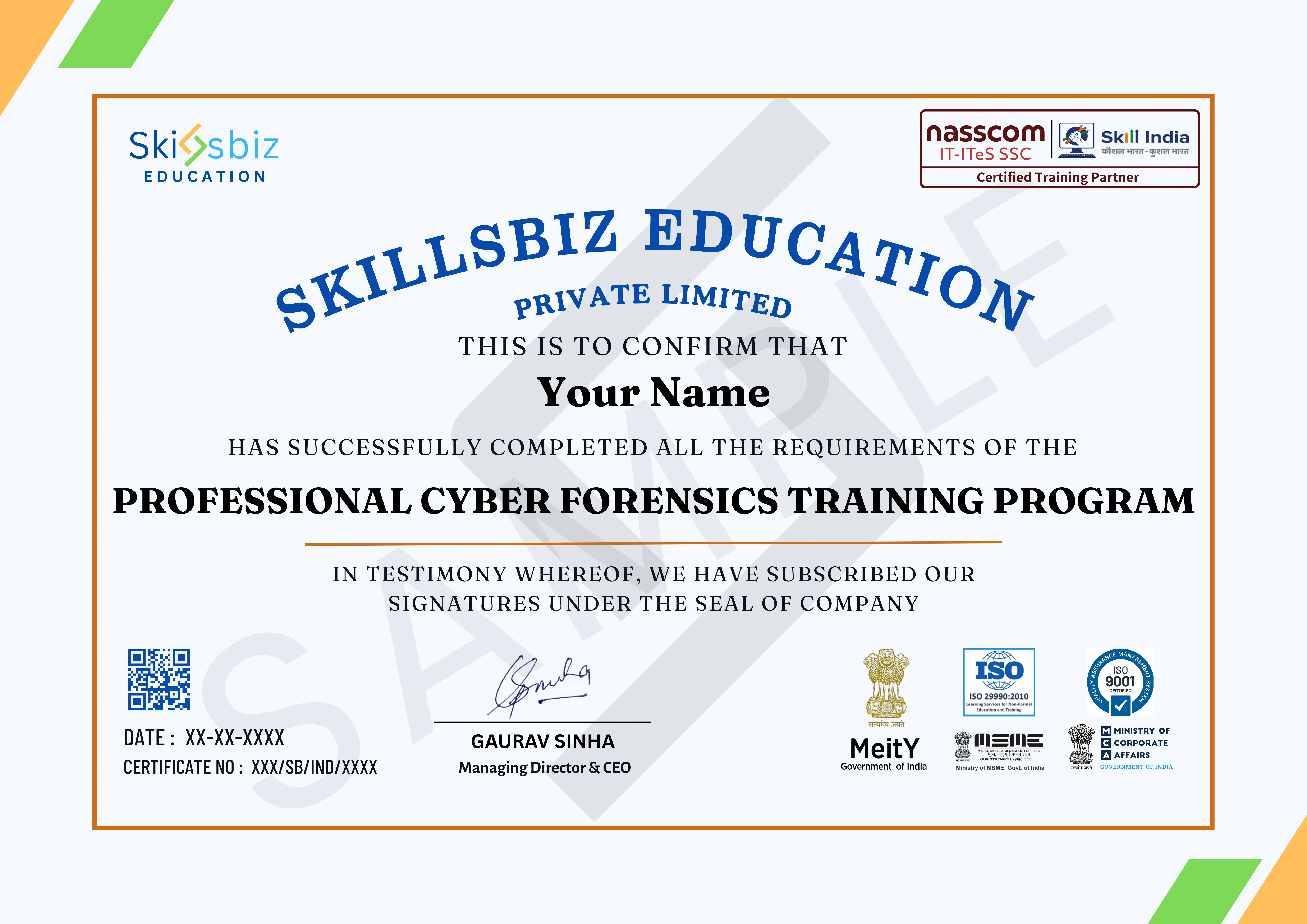
The certificate you'll earn
Earn an industry-recognized certificate on successful completion of this program.
Personalised guidance
Book a free discovery call with our specialists
Get tailored advice on learning paths, certification journeys, and industry opportunities before you enroll.
- Understand the skill gaps holding you back and the modules that close them.
- Get a cohort recommendation based on availability and your weekly bandwidth.
- Discover certification add-ons that strengthen your CV.
Reserve your slot
Share your details and we'll connect within 24 hours.
Reviews
What our learners say
This training gave me confidence in analysing cyber incidents. Learning through real scenarios made the course very effective.
This program made cyber forensics easy to understand. Practical exercises helped me learn how to analyse digital evidence properly.
Cyber forensics training helped me understand how digital evidence is handled in investigations. Working on practical cases made learning very clear.
I liked how the course covered both theory and practical investigation methods. Learning about cybercrime cases made the sessions more interesting.
I gained a clear understanding of how cyber investigations are conducted. Learning data recovery, log analysis, and evidence handling improved my confidence a lot.
Cyber forensics training helped me understand how digital evidence is collected and analysed. Working with forensic tools and real case scenarios made the learning very practical.
FAQ
Your questions, answered
Everything you need to know before you enroll. Still unsure? Our advisors are one call away.
Honored for excellence
Awards & recognitions
Our pedagogy, learner outcomes, and mentor network have been acknowledged by industry councils and global forums.





Media spotlight
Featured in leading publications










Ready to start Professional Cyber Forensics Training Pr...?
Enroll today or book a free counselling call to get a personalized learning path.