Enrolled Agent Certification Program
Become a certified tax expert and help clients with their tax issues as an Enrolled Agent.
Program rating
1,567+
Learners enrolled
52 hrs
Total duration
English,Hindi
Language
This program includes

Program overview
About this program
This Finance & Taxation program blends live, mentor-led sessions with hands-on projects and real-world case studies, so you build genuinely job-ready skills — not just theory. You'll learn from working industry experts, apply what you learn on practical assignments, and finish with a portfolio, a recognized certificate, and dedicated placement support to help you land the right role.
Become a certified tax expert and help clients with their tax issues as an Enrolled Agent.
This course provides comprehensive training on the various aspects of tax preparation and representation. As an enrolled agent, you'll gain the skills needed to represent taxpayers before the IRS and handle complex tax situations.
Why learners love this program
- IRS representation & ethics: Learn to represent clients before the IRS, understand practitioner rules, and apply professional ethics.
- Comprehensive tax preparation: In-depth coverage of individual, business, estate, and specialty tax issues, including complex filings and tax planning.
- EA exam preparation & practical skills: Exam-focused study materials, practice questions, and real-world case studies to build practical tax resolution experience.
26
Lectures
52
Hours
All level
Level
Globally trusted accreditations
Recognitions that power your profile
Trusted by leading accreditation bodies — so your certificate is respected by employers worldwide.








Learning outcomes
What you'll be able to do
Curriculum
Structured modules that build real skills
10 modules · designed for progressive, hands-on learning.
History and Purpose of Taxation
Explain the historical development of the tax system and the foundational purposes of taxation in public finance.
Basic Tax Principles
Describe core tax concepts such as taxable income, tax base, and tax rates and how they affect liability.
Overview of Federal and State Systems
Compare federal and state tax structures and identify the roles of different taxing authorities.
Determining Filing Status
Identify and apply the rules for choosing the correct filing status for various taxpayer situations.
Dependents and Exemptions
Explain who qualifies as a dependent and how exemptions and dependent rules impact tax returns.
Head of Household and Special Situations
Analyze scenarios for head of household and other special filing situations to determine correct filing approaches.
Filing Status Implications
Assess how filing status affects tax rates, credits, and eligibility for deductions.
Types of Taxable Income
Classify common income types including wages, interest, dividends, and business income and their tax treatment.
Non-Taxable and Excludable Income
Identify income that is excludable or non-taxable and the rules governing those exclusions.
Above-the-Line Deductions
Explain above-the-line deductions and calculate adjustments to arrive at adjusted gross income.
Itemized vs Standard Deductions
Compare itemized and standard deductions and determine which yields the better tax outcome for taxpayers.
Business and Self-Employment Deductions
Apply rules for business-related deductions, self-employment tax, and recordkeeping requirements.
Common Tax Credits
Describe major credits such as the Earned Income Credit and Child Tax Credit and their eligibility criteria.
Education and Retirement Credits
Explain education-related credits and retirement incentives and how to claim them correctly.
Refundable vs Nonrefundable Credits
Differentiate refundable and nonrefundable credits and understand their effects on tax liability and refunds.
Key Individual Tax Forms
Identify and complete common individual tax forms, including Form 1040 and its schedules.
Supporting Schedules and Attachments
Determine when to use specific schedules and attachments and how they relate to primary forms.
Electronic Filing and Paper Returns
Compare e-filing and paper filing procedures and outline best practices for timely and accurate submissions.
Filing Deadlines and Extensions
Manage filing deadlines, extensions, and payment options to help taxpayers remain compliant.
IRS Administrative Structure
Describe the IRS organization, case processing flow, and key offices relevant to taxpayer representation.
Types of Audits and Triggers
Recognize different audit types, common audit triggers, and strategies to reduce audit risk.
Power of Attorney and Authorization
Complete and file authorization forms to represent clients and understand scope of representation rights.
Communicating with IRS Examiners
Develop effective communication strategies for interacting with IRS examiners and resolving issues.
Appeals and Collection Matters
Navigate appeals processes and collection alternatives to advocate for taxpayer solutions.
Negotiation and Settlement Techniques
Apply negotiation tactics and settlement options to achieve favorable outcomes for clients.
Case Management Best Practices
Implement case management and documentation practices to maintain professional and compliant representation.
Basics of Estate and Gift Tax
Explain estate and gift tax fundamentals, exemptions, and filing thresholds.
Trust Types and Tax Treatment
Differentiate common trust types and describe their respective tax implications.
Filing Estate and Trust Returns
Prepare fiduciary returns and understand reporting requirements for estates and trusts.
Planning Strategies for Transfers
Assess planning techniques to minimize transfer taxes and advise clients on compliant strategies.
Professional Responsibilities
Describe the ethical responsibilities of tax professionals, including competence and due diligence standards.
Confidentiality and Conflict of Interest
Apply rules on client confidentiality and manage potential conflicts of interest appropriately.
Penalties and Professional Conduct
Identify possible penalties for misconduct and best practices to maintain professional conduct.
Exam Structure and Content Areas
Outline the Enrolled Agent exam format, content domains, and weighting to guide study planning.
Study Strategies and Resources
Implement effective study techniques, time management, and resource selection for exam preparation.
Practice Questions and Problem Solving
Practice exam-style questions and develop problem-solving methods to improve accuracy and speed.
Mock Exams and Performance Review
Take full-length mock exams and analyze performance to target weak areas and track progress.
Test Day Procedures and Tips
Prepare for test day logistics, stress management, and final review strategies to optimize performance.
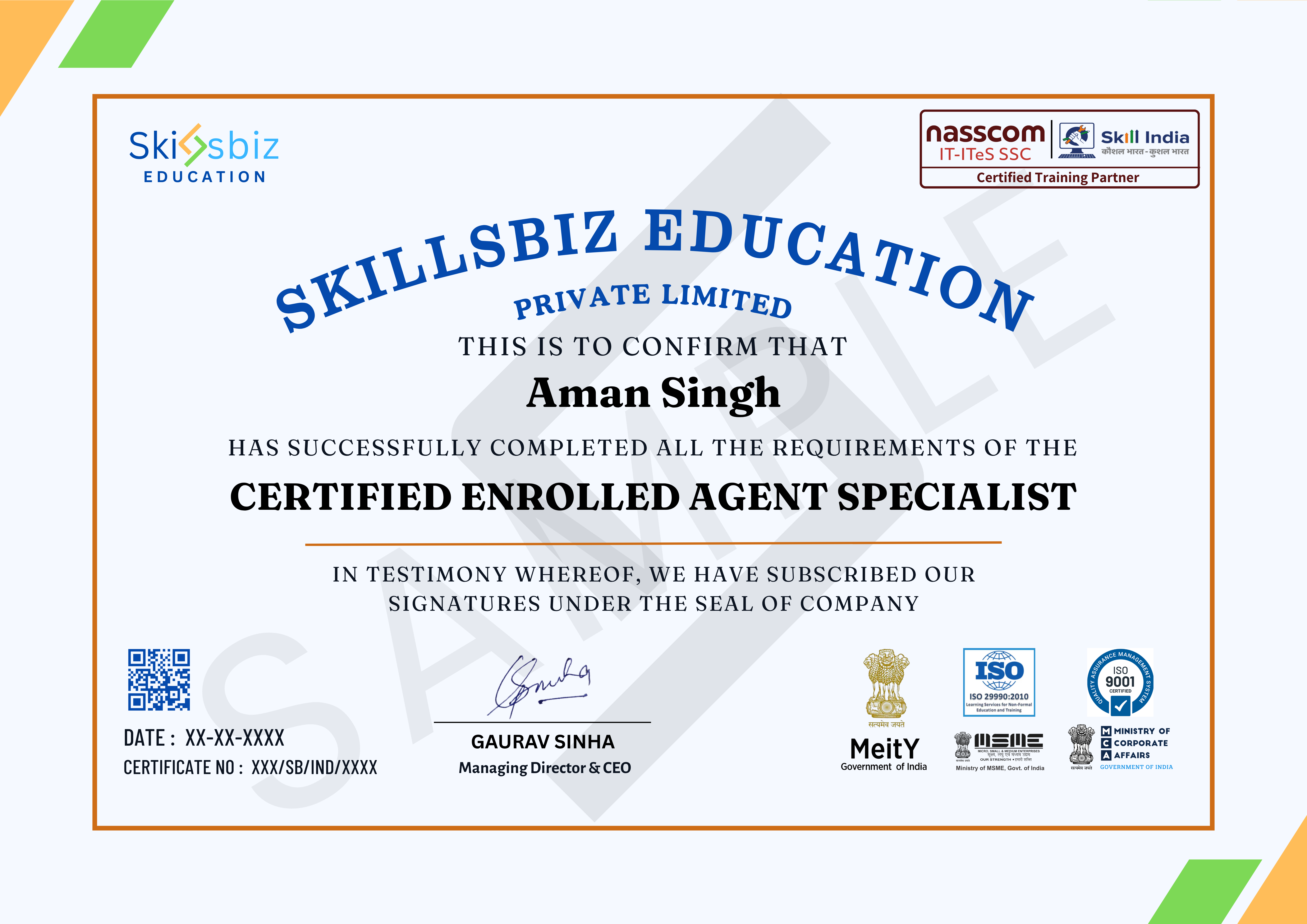
Your credential
The certificate you'll earn
Earn an industry-recognized certificate on successful completion of this program.
Personalised guidance
Book a free discovery call with our specialists
Get tailored advice on learning paths, certification journeys, and industry opportunities before you enroll.
- Understand the skill gaps holding you back and the modules that close them.
- Get a cohort recommendation based on availability and your weekly bandwidth.
- Discover certification add-ons that strengthen your CV.
Reserve your slot
Share your details and we'll connect within 24 hours.
Reviews
What our learners say
I joined the EA course at Skillsbiz and found it very professional and well-organized. The trainer covered every topic thoroughly and made sure we understood before moving forward. The case-based approach was very effective. This training h...
The Enrolled Agent training at Skillsbiz helped me gain strong knowledge of US taxation. The sessions were engaging and filled with practical examples. The support team was always available for guidance. I feel confident that I will clear t...
Skillsbiz EA program was well-structured and very informative. The trainer explained difficult concepts in a simple way and guided us with exam strategies. The practice tests were extremely useful for preparation. This course has given me a...
I enrolled for the Enrolled Agent program with Skillsbiz and it was a very good experience. The sessions were interactive, and the trainer gave us practical insights into taxation procedures. The mock exams were extremely useful. I feel wel...
The EA training at Skillsbiz was very detailed and beginner-friendly. The trainer explained US taxation concepts clearly and gave many real examples. The structured study material and doubt sessions helped me a lot. This course has given me...
Joining Skillsbiz for the Enrolled Agent course was the best decision for my career in taxation. The syllabus was explained step by step, covering all three parts of the EA exam. The practice questions and mock tests were very close to the...
FAQ
Your questions, answered
Everything you need to know before you enroll. Still unsure? Our advisors are one call away.
Honored for excellence
Awards & recognitions
Our pedagogy, learner outcomes, and mentor network have been acknowledged by industry councils and global forums.




Media spotlight
Featured in leading publications










Ready to start Enrolled Agent Certification Program?
Enroll today or book a free counselling call to get a personalized learning path.